
Choosing the best electric tankless water heater is not about finding the model with the highest power rating or the longest feature list. The right choice depends on how much hot water you need, the incoming water temperature, the required flow rate, and whether the electrical supply can support the heater.
Electric tankless water heaters heat water only when there is demand, so they do not require a large storage tank. Their compact design also makes them useful for applications ranging from kitchen sinks and individual showers to apartments and multi-point commercial systems.
However, one model cannot suit every application. A 5.5 kW unit designed for a sink has very different capabilities from an 18–24 kW three-phase system. This guide explains what to compare before choosing an electric tankless water heater and how to match the heater to the actual application.
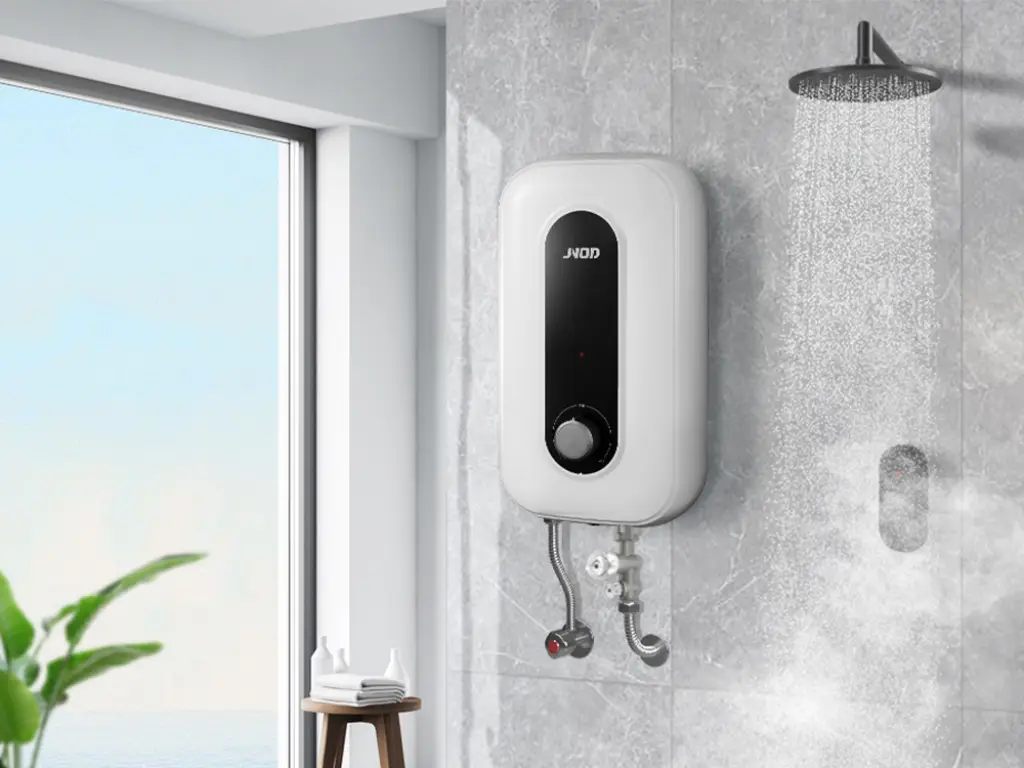
What are Tankless Water Heaters?
Tankless water heaters, also referred to as instant water heaters, are modern devices that heat water without using a storage tank. When you open the hot water tap, cold water flows through a pipe into the unit and then either an electric element or a gas burner heats the water immediately. This process makes sure that you have enough hot water supply anytime you need it and do not have to wait for a long time.
Because the heater works on demand, its performance depends heavily on heating power, water flow rate, and temperature rise. These three factors are more useful for product selection than tank capacity.
Why Choose Electric Tankless Water Heaters?
Tankless water heaters come in two main types: gas and electric. Although both types provide the convenience of on-demand hot water and lower energy bills, electric tankless water heaters have some features that are exclusive to them and make them a great option for many homeowners.
1. Easier installation and convenience: Electric tankless water heaters are easier to install than gas types of water heaters. They do not need a gas connection or a vent, which is more advantageous than the other types, especially for homes that cannot access natural gas or propane. For instance, a survey conducted by the National Association of Home Builders revealed that more than half of newly constructed homes do not have gas lines, making electric tankless water heaters a practical choice.
2. Enhanced safety: Electric tankless water heaters are generally safer than their gas counterparts. They do not emit any greenhouse gases or carbon monoxide; thus, there are no dangers of gas leakage or explosion.
3. Reduced maintenance: Electric tankless water heaters are easier to maintain as compared to the gas ones. They do not have a pilot light or burners that require frequent cleaning and adjustment. There is no gas line either, so there is no chance of having a leak or corrosion of the pipe. This leads to reduced maintenance expenses and increased durability of the unit. On average, electric tankless water heaters can last up to 20 years with proper maintenance, while gas models can last up to 10-15 years. (Learn: Understanding the Tankless Water Heater Lifespan: What You Need to Know)If you have hard water, it is recommended to have your electric tankless water heater serviced twice a year to prevent potential issues and ensure its longevity.
4. Environmentally friendly: Electric tankless water heaters are more eco-friendly than gas tankless water heaters. This is because they do not emit any direct greenhouse gases into the atmosphere, which leads to a reduced carbon footprint. Furthermore, as the electricity grid evolves to incorporate more solar and wind power, the environmental footprint of electric tankless water heaters will only continue to reduce.
What Makes the Best Electric Tankless Water Heater?
There is no single “best” electric tankless water heater for every buyer. A better way to compare products is to check whether the heater matches the application.
Focus on these six factors:
| Factor | What to Check |
|---|---|
| Flow rate | How much hot water is needed at peak use? |
| Temperature rise | How cold is the incoming water compared with the required outlet temperature? |
| Heating power | Is the kW rating sufficient for the required flow and temperature rise? |
| Electrical supply | Do voltage, phase, breaker capacity, and wiring match the heater? |
| Temperature control | Can the unit maintain a stable outlet temperature under normal operating conditions? |
| Safety and compliance | Does the model have the required protection and documentation for the target market? |
For wholesale buyers and project customers, product reliability is only part of the decision. Documentation, certification, spare parts, OEM/ODM support, and after-sales service can also affect the long-term value of the product.
JNOD’s guide to electric water heater certifications for wholesale buyers explains what buyers should verify at the model level before placing an order.
How To Choose Your Best Electric Tankless Water Heater?
The right heater starts with the actual hot water demand. Floor area or household size alone is not enough.
1. Calculate the Required Flow Rate
Start by identifying the outlets that may operate at the same time.
For example, a single shower has a very different demand from two showers plus a kitchen sink. For multi-point systems, add the expected simultaneous flow rather than the maximum flow of every outlet in the building.
If the main application is a shower, see the JNOD tankless electric water heater shower sizing guide for more detailed examples.
2. Check the Temperature Rise
Temperature rise is the difference between the incoming cold-water temperature and the required outlet temperature.
For example:
Inlet water: 15°C
Required outlet: 40°C
Temperature rise: 25°C
The colder the incoming water, the more heating power is required to maintain the same flow rate.
The U.S. Department of Energy also recommends sizing tankless water heaters using both the maximum required flow rate and maximum temperature rise, rather than selecting a unit from household size alone.
3. Match Flow Rate and Temperature Rise to kW
For electric resistance heating, the required power can be estimated from:
Power (kW) ≈ Flow Rate (L/min) × 0.0698 × Temperature Rise (°C)
For example:
6 L/min × 0.0698 × 25°C ≈ 10.5 kW
This calculation provides a useful starting point. Actual product selection should also consider heater efficiency, flow variation, electrical capacity, and operating conditions.
For a more detailed calculation, see JNOD’s guide to choosing the right kW for an instant electric water heater.
4. Choose Point-of-Use or Multi-Point
A point-of-use heater serves a specific outlet or small area, such as:
- Kitchen sink
- Washbasin
- Individual shower
A higher-power multi-point system can supply several outlets, provided the heater has enough heating capacity for the expected simultaneous flow.
Do not assume that whole-house is automatically better. In some buildings, several smaller point-of-use heaters can reduce long hot-water pipe runs and simplify zoning.
5. Check the Electrical Supply
This is one of the most important steps.
Do not use a fixed rule such as “a whole-house heater needs a 240 V, 40 A circuit.” Electrical requirements vary greatly with heater power and configuration.
Before selecting a model, check:
- Rated voltage
- Single-phase or three-phase supply
- Rated current
- Breaker requirements
- Cable requirements
- Available electrical capacity
Higher-power commercial applications may require a three-phase supply. JNOD’s 3-phase instant electric water heater guide explains this in more detail.
A qualified electrician should confirm the final electrical installation according to local requirements.
6. Check Safety and Certification
Look beyond marketing terms such as “safe” or “premium.”
Check the actual product specifications for features such as:
- Overheat protection
- Leakage protection
- Dry-heating protection where applicable
- Water/electricity isolation
- Pressure protection
- IP rating
- Applicable certification and compliance documentation
For distributors and importers, the exact model matters. A certificate held by the manufacturer does not necessarily cover every voltage, power rating, or product version.
Which JNOD Electric Tankless Water Heater Fits Your Application?
The American Home Appliance Manufacturers Association (AHAM) suggests evaluating electric tankless water heaters based on their performance in maximum flow rate, output water temperature, and thermal efficiency.
We agree with these assessment criteria and have also taken into consideration the factors that consumers value most when purchasing an electric tankless water heater, as revealed in a market research report by the renowned Spruce Institute. By combining these insights, we have developed the following standards to judge the quality and performance of electric tankless water heaters: quality of materials and components, water temperature range, efficiency rating, and advanced features. Here is the list of the best tankless water heaters we chose:
3 Phase Instant Water Heater – JNE
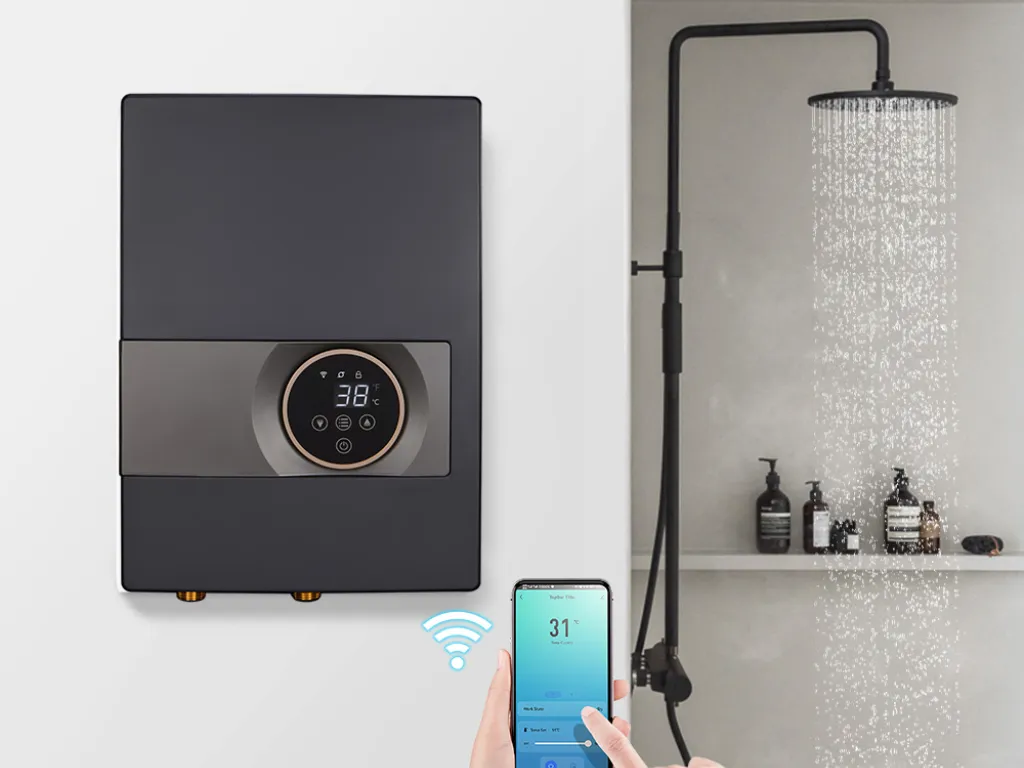
- Materials: High-quality ABS case, cast aluminum heating element
- Temperature Range: Adjustable between 30-60℃
- Efficiency Rating: 98% thermal energy efficiency
This model is characterized by its elegant and durable ABS casing and an enhanced touchscreen panel that provides users with an easy-to-use interface for adjusting the temperature. Compared to conventional tank heaters, the compact size of the tankless water heater means that it can be installed on the wall or at multiple points of use, making it suitable for any home or commercial building.
It incorporates JNOD’s unique cast aluminium heating component, which provides a safe water and electricity separation. The multiple-layer heating chamber design helps prevent limescale formation, thus increasing the lifespan of the heater and its efficiency. Additional features include overheat protection, IP25 waterproofing, and auto-detection of faults. The JNE’s capability to deliver hot water within 5 seconds and the thermal efficiency of 98% make it a perfect choice for energy-conscious consumers who expect reliability and performance.
Shower Water Heater – QA-T
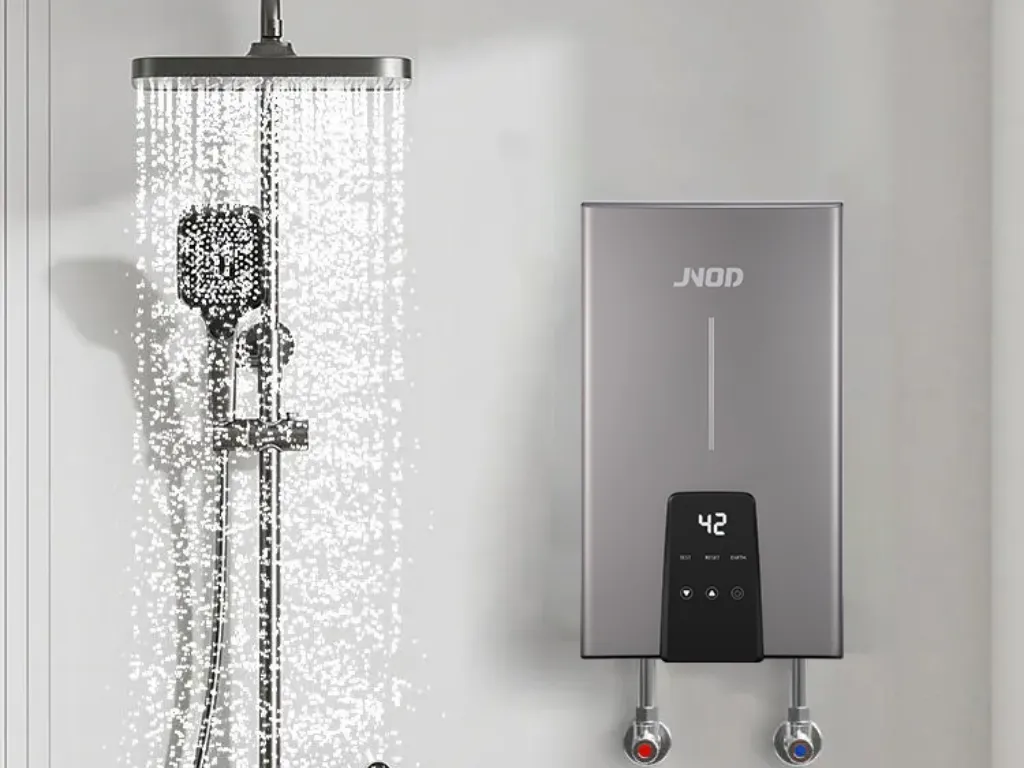
- Materials: High-quality ABS case, cast aluminum heating element
- Temperature Range: Adjustable between 30-55℃
- Efficiency Rating: 98% thermal energy efficiency
It is convenient for users with dual control options that include a touch screen and a stepless knob switch for temperature control.
Another feature that is exclusive to the QA-T is the ELCB leakage protection that shuts off the power supply immediately in case of leakage. Also, it provides hot water at a very fast rate and without interruption, while it is also energy efficient and maintains the temperature difference within one degree. The QA-T has incorporated numerous safety features and easy-to-use controls that make it the best choice for home use and therefore is highly recommended.
Electric Shower Water Heater – FA
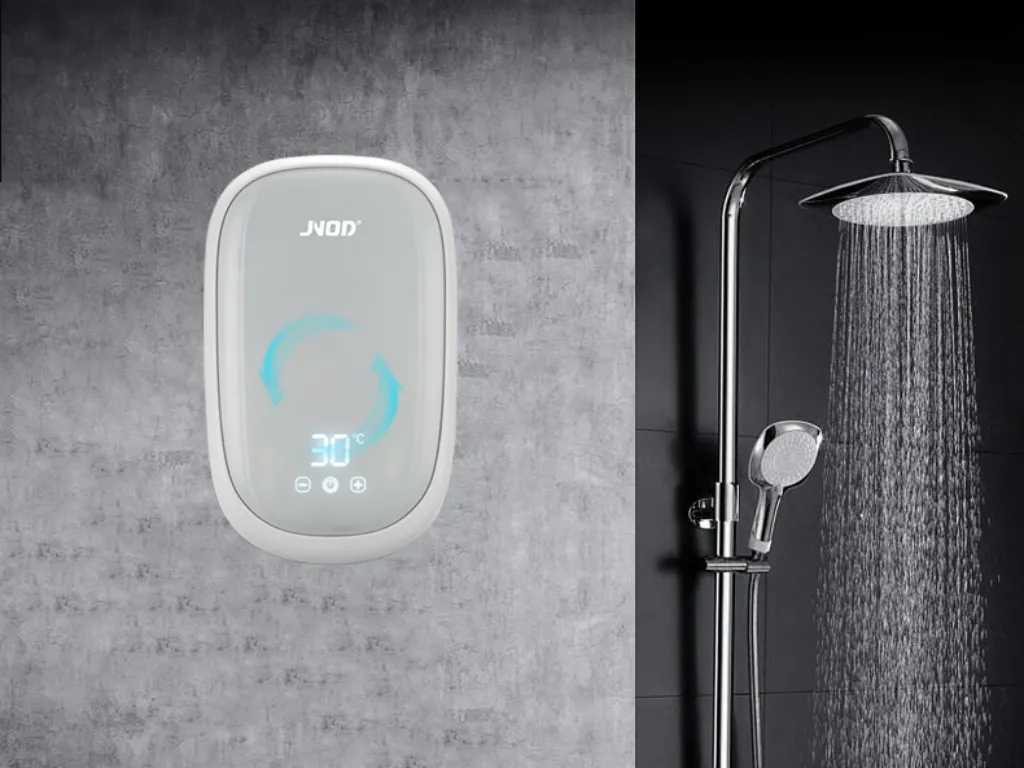
- Materials: High-quality ABS front cover, cast aluminum heating element
- Temperature Range: Adjustable between 30-55℃
- Efficiency Rating: 98% thermal energy efficiency
This model is designed for those who appreciate both the look of the item and its practical use. This model has an oval shape and an ABS front cover that makes it look like part of a modern bathroom interior and is protected against water splashes and corrosion. The touch screen panel is easy to use and enables the user to set the desired temperature to achieve the best shower experience.
This heater is equipped with numerous safety features, such as overheat, anti-scalding, and leakage protections, which are essential for everyday usage. The patented cast aluminum heating element ensures fast and effective heating so that hot water is available in a matter of seconds. The multi-layer heating chamber design helps to reduce limescale formation and ensures longer service and high efficiency. The FA model is a perfect fit for households that seek a small, energy-efficient water heater that will provide hot water reliably and safely while being environmentally friendly.
Kitchen Water Heater – KE
- Materials: High-quality front case, cast aluminum heating element
- Temperature Range: Adjustable between 30-55℃
- Efficiency Rating: 98% thermal energy efficiency
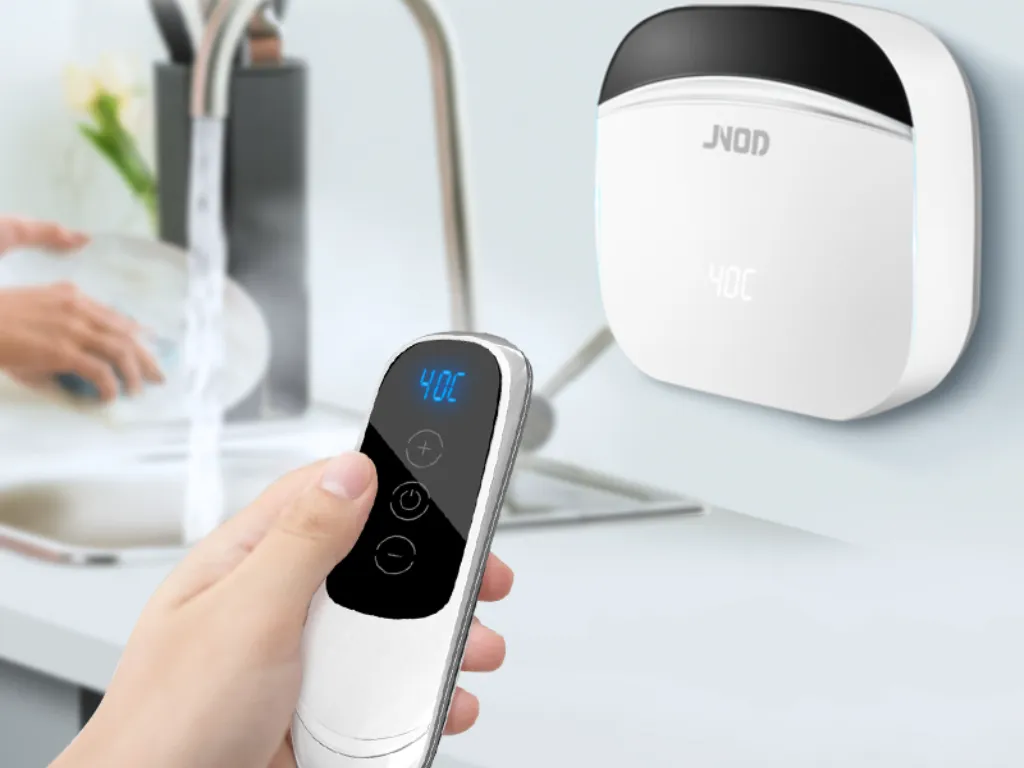
The KE model is intended for use in the kitchen area and is equipped with the latest technologies. This model has several ways of controlling the operation, such as a touch screen, remote control, and smart WiFi app, which makes it convenient to use. It is 90% smaller than traditional tank heaters, and therefore, it can be easily installed on the wall or under the sink to save kitchen space.
The KE has a unique multi-layer heating chamber that helps avoid limescale accumulation hence durability and efficiency. The KE model has additional safety features like overheat protection, IP25 waterproofing, and automatic fault detection. Also, its LED widescreen display shows working conditions and can be installed in an upside-down manner. The KE is perfect for kitchens as it provides hot water instantly and regulates the temperature perfectly and conveniently.
Conclusion
The best electric tankless water heater is the one that can provide the required hot water flow and temperature without exceeding the available electrical capacity.
Before comparing features, start with four questions:
- How much hot water is needed at peak use?
- What temperature rise is required?
- How many kW are needed to meet that demand?
- Can the site’s electrical supply support the heater?
After that, compare temperature control, safety protection, certification, installation requirements, and manufacturer support.
For homeowners, this approach helps avoid an undersized or oversized heater. For distributors, contractors, and OEM buyers, it also makes product selection easier across different climates and project requirements.
Get the Right JNOD Electric Tankless Water Heater
If you are selecting electric tankless water heaters for distribution, OEM/ODM, residential projects, or commercial applications, send JNOD your:
- Target market
- Application
- Required flow rate
- Inlet water temperature
- Target outlet temperature
- Voltage and phase
JNOD can help match the required heating capacity and product configuration to the project.
 English
  Arabic
  Russian
  Spanish